
Research and resources on links between gender-based violence and climate change
12
August
2026
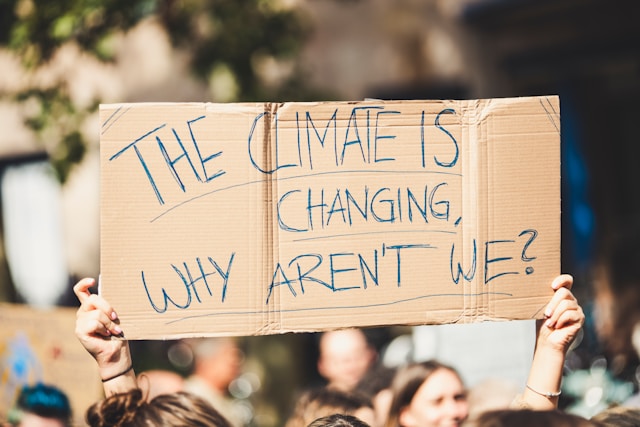


As climate change worsens, gender-based violence also worsens. Climate change multiplies the risks and impacts of gender-based violence in the following ways:
- Climate change creates hardship, including poverty, displacement, and disruption of services, which disproportionately affects women and girls.
- Hardship and other multipliers of risk can intensify the social drivers of violence, worsening existing gender inequalities and amplifying the marginalisation and discrimination women and girls face.
- Colonisation, especially systemic dispossession of Māori land, exacerbates the risks Māori face as a result of climate change.
- During disasters, women and girls face gender-based risks, including but not limited to early or forced marriage, exploitation and human trafficking, higher likelihood of death or injury, poverty, and disruption of gynaecological healthcare.
- Women, girls, and Māori are often excluded from decision-making processes that respond to climate change, which deprives them of critical safety mechanisms.
- Women and girls who are visible in public capacities responding to climate change and gender-based violence face increased backlash, including human rights defenders.
What are the links between gender-based violence and climate change?
This News Story examines the growing body of evidence that climate change increases the severity of violence and the number of women and girls experiencing that violence. While climate change does not directly cause gender-based violence, extreme weather events and global warming can lead to economic instability, damaged infrastructure, food insecurity, ruptured social ties, deepening fragility and conflict, and water scarcity.
When these impacts intersect with a societal background of inequitable power dynamics, discrimination and harmful gender norms, they can exacerbate violence against women and girls. In turn, these impacts affect women and girls’ ability to adapt or recover from climate-induced emergencies and disproportionately risks their livelihoods.
Natural disasters and the humanitarian emergencies they generate are expected to continue to rise, leading to enormous displacement. Many displacements from natural disasters also happen in conflict-affected settings, underscoring the importance of improving humanitarian capacity to meet both kinds of emergency demand.
Why are women and girls disproportionately affected by climate change?
Systemic reviews confirm that women and girls face increased gender-based violence during disasters, emergencies, and extreme weather events. Risk factors that women and girls face for gender-based violence include unequal social norms, gender inequalities, increased life stressors, law enforcement failures, migration, and exposure to high-risk environments. Extreme events also potentially increase reporting of existing gender-based violence.
Women and girls are much more likely to die during climate-related disasters than men, with some possible explanations including lower access to resources, care responsibilities, gendered poverty, and gender discrimination during relief efforts. Women also face unique risks from heat stress brought on by anthropogenic climate change. Areas where women face significant social and economic discrimination see the greatest impacts on women’s comparative vulnerability in disasters – that is, in settings where women have more social and economic means and agency, the disaster mortality rates for men and women are roughly the same.
Women and girls also face an increase in gender-based violence during infectious disease outbreaks, which are becoming more prevalent due to climate change, urbanisation, and changes in land use. Violence against women and girls was exacerbated during Covid-19 by movement restrictions that meant they could not as easily avoid abusive family members, could not access social services, and faced heightened financial insecurity.
What risks do women and girls face during climate disasters and other emergencies?
During climate disasters and other emergencies women face increased risk of violence including rape, sexual assault, female genital mutilation, honour killings, human trafficking, and early or forced marriage. The physical, mental, and social consequences of this violence are profound, and can include injury, death, trauma, mental health issues, substance dependency, poverty, pregnancy, miscarriage, and abortion among others.
Some evidence suggests that communities under stress may adopt more conservative or customary patriarchal practices. Climate disasters can contribute to community conflict over resources and increased violent behaviour by men, including gender-based violence. Women and girls face a variety of risks, including:
- They may not be seen as responsive to domestic demands of male family members, particularly if men lose their jobs, increasing their exposure to IPV
- They may have to walk great distances to collect resources like water, increasing their exposure to sexual violence
- They may be displaced from their homes and relocated to transit centres refugee camps, increasing their exposure to sexual violence
- They may be forced or coerced into exchanging sexual acts for resources, as part or full payment, including sex work
- Girls may be married early to relieve some financial burdens or settle debts
- They may be unable to migrate out of danger zones due to lack of economic resources or heavy care or domestic burdens
- They may be deprived of basic income to meet household needs, increasing their exposure to IPV.
Indigenous women and girls are exposed to amplified risks as they face additional systemic structural barriers to safety. In colonial and post-colonial contexts, historical and continued systemic oppression, including the denial of basic needs and limited access to social, economic, and political resources, exacerbates the impacts of gender-based violence and climate disasters.
Women and girls as environmental human rights defenders
Women play a crucial role in climate change action, particularly as environmental human rights defenders. However, women and women’s rights organisations face barriers to taking action – their voices and agency are undervalued, and they are met with rising threats, gender-based violence, and even femicide. Indigenous women, who are often at the frontline of environmental action to protect their rights, livelihoods, territories, and resources, face even greater risks in this space. This is driven by long-intersecting forms of discrimination and violence, namely racism, colonialism, and colonisation.
In Aotearoa, wāhine Māori often lead responses to climate disasters. Their work in, with, and for their communities during and after flooding, for example, is an intersection of gendered and cultural labour that comes from a place of deep aroha for their communities. Yet, many of these wāhine report facing heightened public scrutiny or even abuse from the wider public for their efforts.
What structures stand in the way of addressing these issues?
To move forward, both the issues of gender-based violence and climate change need to be addressed at the same time. Failure to address one undermines efforts to overcome the other. In international policy spaces, more work is needed to raise awareness of the issues, build strategic alliances to expedite action, and to include gender-based violence considerations into environmental response projects.
- Gathering more data to understand the true impact of climate change on violence against woman and girls, including greater collection of sex-disaggregated data
- Increasing investment in flexible and adaptive approaches to prevent and respond to violence against woman and girls
- Ensuring that responses are always survivor-centred and trauma-informed
- Preventing violence against women environmental human rights defenders and holding perpetrators to account.
Other research and resources
Aotearoa
Hauraki Māori: weathering Cyclone Gabrielle, Moyle et. al. (2025)
This research aimed to understand how Hauraki Māori mobilised to address the disaster response and recovery needs of whānau during Cyclone Gabrielle. The goal was to use these insights to improve local civil defence planning, enhance communication between Thames Coromandel District Council and Hauraki Māori, and inform more effective resource allocation for future extreme weather events.
Advice for disabled people in emergencies, National Emergency Management Agency | Te Rākau Whakamarumaru
This site, Get Ready, provides advice for emergency readiness. The above resource is a collection of advice for disabled people or those with requirements that may put them at greater risk in an emergency.
Climate-related distress and perceptions of government climate action among Indigenous and non-Indigenous youth in Aotearoa New Zealand: a nationally representative cross-sectional survey, Huston et. al. (2026)
This research examines responses to a nationally representative survey of Māori and non-Māori youth in Aotearoa on climate-related distress and perceptions of government climate action.
International
Climate change, disasters and gender-based violence in the Pacific, UN Women (2021)
This brief is part of UN Women Fiji Multi-Country Office’s series on the links between climate change, gender, and development issues including women’s economic empowerment, health, food security, and energy. This brief highlights the impact of climate change and disasters on women in the Pacific.
Comprehensive report on the needs and recovery of Filipino survivors of the Lahaina fires, Tagnawa (2025)
This report focuses on Filipino survivors of the 2023 Lahaina fires and highlights women’s experiences of gender-based violence after the disaster.
Taking Stock: Sexual and reproductive health and rights in climate commitments, UNFPA and Queen Mary University of London (2023)
This research looks at the impacts of climate change on women and girls’ sexual and reproductive health and rights. It finds that climate change has a detrimental impact on these rights, and that efforts to address climate change without addressing these rights and gender equality risks exacerbating these.
Rising heat and rising harm: a systematic review of heat and gender-based violence, Pearson et. al. (2026)
This systematic review examines the relationship between heatwaves and heat stress and gender-based violence. It notes the urgent need for longitudinal studies using interdisciplinary methods and community-led research to better inform prevention and response strategies.
Bibliography
Extreme events and gender-based violence: a mixed-methods systematic review, van Daalen et al. (2022)
Climate change and gender-based violence: what are the links? SDDirect GBC AoR Helpdesk (2021)
Colliding crises: how the climate crisis fuels gender-based violence. Issues brief, Spotlight Initiative (2025)
Natural hazards, disasters and violence against women and girls: a global mixed-methods systematic review, Thurston et al. (2021)
A systematic review of infectious disease outbreaks and violence against women and girls: changes in magnitude, mechanisms and lessons for the future, Stark et al. (2026)
Gender-based violence and environment linkages: the violence of inequality, IUCN (2021)
Gender-differentiated and age-specific risks of heat stress in a warming world: implications for equality and resilience, UN Women (2026)
Tackling violence against women and girls in the context of climate change, UN Women (2022)
Indigenous-led community research in a changing climate: impacts of Cyclone Gabrielle on the health and wellbeing of Māori in Te Tairāwhiti, Aotearoa New Zealand, McClutchie et al. (2026)
Prevention of, and response to gender-based violence in settings affected by natural disasters: with a specific look at Asia and the Pacific. Guidance note, SDDirect GBC AoR Helpdesk (2020)
What keeps women safe from violence during shocks?: review of risk and protective factors in the Indo-Pacific Region, Oo et al. (2026)
Related news and resources
.webp)




Subscribe to our pānui and our news and events mailing lists
Never miss an update! Receive the latest news and event information directly to your inbox.